
US F1 Visa Process 2026: Step-by-Step Guide for International Students
edubeatsworld.com
5/15/2026
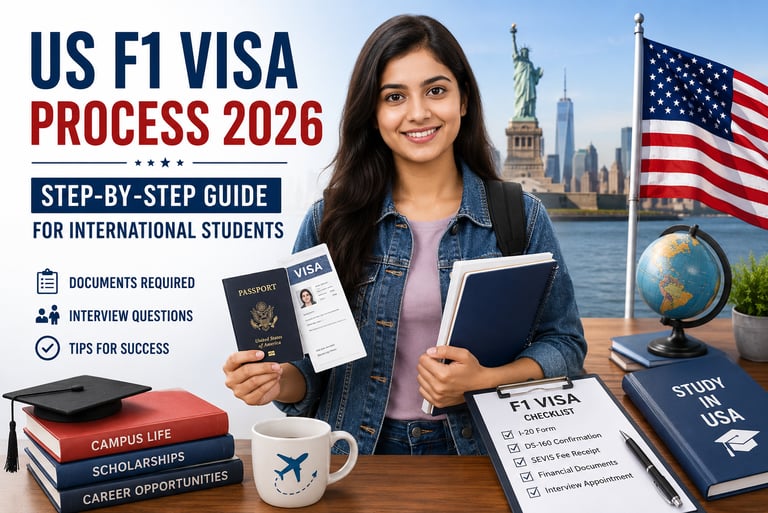
For many students, receiving admission to a university in the United States is an exciting milestone. However, after the admission letter arrives, the next important challenge begins — applying for the F1 student visa. From arranging financial documents to preparing for the visa interview, the process involves several important steps that students must complete carefully.
The good news is that with proper planning, organized documents, and confidence, the F1 visa process can become much smoother and less stressful.
If you are planning to study in the United States in 2026, this guide explains the complete F1 visa process, required documents, common interview questions, and practical tips to help you prepare successfully
What is an F1 Visa?
The F1 visa is a non-immigrant student visa issued to international students who wish to pursue full-time academic studies in the United States. It is commonly required for students enrolling in:
Universities and colleges
Undergraduate programs
Master’s and PhD programs
Language training programs
Certain academic or professional courses
The visa allows students to stay legally in the US for the duration of their academic program.
Step-by-Step F1 Visa Process 2026
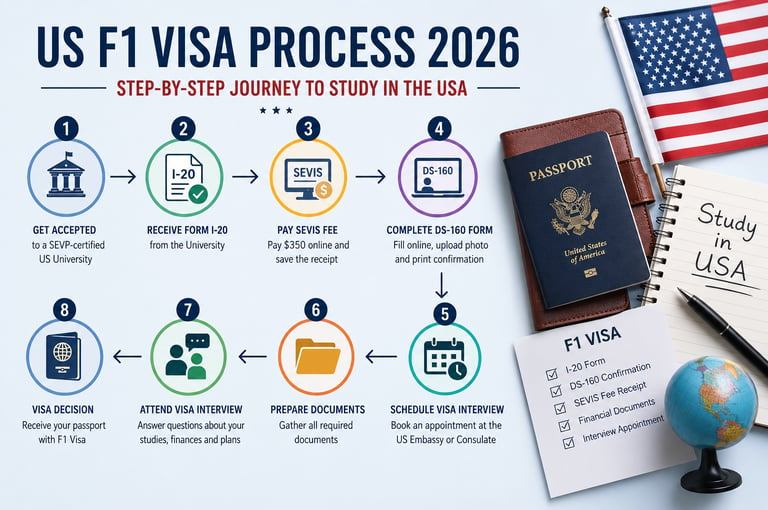
1. Get Accepted to a SEVP-Certified US University
The first step in the process is securing admission to a US institution approved under the Student and Exchange Visitor Program (SEVP).
Before applying, students should carefully research universities based on:
Courses and specializations
Tuition fees
Scholarships
Campus facilities
Internship opportunities
Location and living expenses
Once selected by the university, students receive an official admission or acceptance letter.
Choosing a SEVP-certified institution is essential because only approved universities can issue the documents needed for a student visa.
2. Receive Form I-20
After confirming admission and submitting financial proof to the university, students receive the Form I-20.
The Form I-20 is one of the most important documents in the entire visa process. It contains details such as:
Student information
Course details
Program duration
Estimated expenses
SEVIS identification number
Source of financial support
Students should check all details carefully to ensure there are no mistakes.
3. Pay the SEVIS Fee
Students must then pay the SEVIS (Student and Exchange Visitor Information System) fee online.
For most F1 visa applicants, the SEVIS fee is approximately $350.
After making the payment, students should save and print the payment receipt because it may be required during the visa interview.
The SEVIS system helps the US government maintain records of international students studying in the country.
4. Complete the DS-160 Form
The next important step is filling out the online DS-160 Non-Immigrant Visa Application Form.
The form requires details related to:
Personal information
Educational background
Travel information
Passport details
Security and background questions
Students must also upload a passport-sized photograph according to US visa photo guidelines.
After submitting the form, applicants receive a DS-160 confirmation page containing a barcode. This page should be printed and carried to the visa interview.
It is important to provide accurate information because inconsistencies can create complications during the application process.
5. Schedule the Visa Interview
Once the DS-160 form is completed and the visa fee is paid, students can schedule their visa interview appointment at the nearest US embassy or consulate.
Interview waiting times may vary depending on the season and country. During peak admission periods, appointments may fill quickly, so students should apply as early as possible.
In some countries, students may also need to attend a biometric appointment before the interview.
6. Prepare All Required Documents
Document preparation plays a major role in the F1 visa process. Keeping documents properly arranged helps students stay confident and organized during the interview.
Below are the important categories of documents students should carry.
Required Documents for F1 Visa 2026
Identity Documents
Students should keep the following identity-related documents ready:
Valid passport
DS-160 confirmation page
Visa appointment confirmation
Form I-20
SEVIS fee receipt
Passport-sized photographs
The passport should generally remain valid for at least six months beyond the intended period of stay in the United States.
(Students planning international education may also explore Germany’s affordable public university system through our detailed guide on Germany Free Education 2026 for Indian Students.)
Academic Documents
Academic documents help demonstrate educational qualifications and readiness for higher studies.
These may include:
School and college transcripts
Degree certificates or diplomas
Mark sheets
Admission letter from the university
English proficiency test scores
Standardized test scores such as:
SAT
ACT
GRE
GMAT
TOEFL
IELTS
PTE
Students may also carry certificates of achievements or extracurricular activities if relevant.
Financial Documents
Financial proof is extremely important because visa officers need assurance that students can manage tuition fees and living expenses in the United States.
Financial documents may include:
Bank statements
Fixed deposit certificates
Income tax returns
Salary slips of sponsors
Education loan approval letters
Scholarship letters
Sponsor affidavits
Students should ensure that the financial information presented during the interview matches the supporting documents.
Additional Documents
Depending on university or embassy requirements, students may also carry:
Vaccination records
Medical certificates
Police clearance certificate (if required)
Resume or CV
Statement of Purpose (SOP)
Though some of these documents may not always be requested, carrying them as backup can be helpful.
Attending the F1 Visa Interview
The visa interview is often the most stressful stage for students, but preparation and confidence can make a major difference.
The visa officer usually wants to understand:
Why the student wants to study in the US
Why a particular university was chosen
Academic and career goals
Financial capability
Future plans after graduation
Most interviews are short, so students should answer honestly, confidently, and clearly.
Common F1 Visa Interview Questions
“Why do you want to study in the US?”
This question helps the officer understand the student’s academic motivation.
Students should explain:
Why they selected the specific course
Why the university suits their goals
How studying in the US will support their future career
Genuine and thoughtful answers create a stronger impression than memorized responses.
“What will you do after completing your studies?”
The officer wants to understand the student’s long-term plans after graduation.
Students can discuss:
Career aspirations
Professional opportunities in their home country
How international education will contribute to future growth
Showing clear future goals connected to the home country can positively support the application.
“How will you finance your education?”
Students should confidently explain how they plan to manage tuition fees and living expenses.
This may include:
Family sponsorship
Personal savings
Education loans
Scholarships or grants
The explanation should match the financial documents submitted.
“Tell me about your family and background.”
Students can briefly discuss:
Family details
Educational background
Career interests
Personal goals
This question also helps officers understand the student’s ties to their home country.
Practical Tips for F1 Visa Success in 2026
Organize Documents Carefully
Keep all documents arranged neatly in labeled folders for quick access during the interview.
Practice Interview Questions
Mock interviews with teachers, mentors, or friends can help improve confidence and communication skills.
Be Honest and Clear
Students should always provide truthful answers and avoid giving misleading information.
Demonstrate Strong Home Country Ties
Showing family connections, career plans, or future opportunities in the home country may strengthen the visa application.
Show Financial Stability
Clear financial records help reassure visa officers that the student can manage educational expenses responsibly.
Stay Calm and Confident
Feeling nervous is natural, but students should remain polite, calm, and confident throughout the interview process.
Simple and direct answers are usually more effective than overly lengthy explanations.
Final Thoughts
The F1 visa process for 2026 may initially seem detailed and overwhelming, especially for first-time international students. However, proper preparation, organized documentation, and a confident interview approach can make the process significantly easier.
Studying in the United States offers valuable opportunities for academic growth, global exposure, research, and career advancement. With careful planning and genuine preparation, students can take an important step toward achieving their educational goals and international study dreams.
Disclaimer
This article titled “US F1 Visa Process 2026: Step-by-Step Guide for International Students” is intended solely for educational and informational purposes. The content has been prepared on the basis of publicly available information, official educational resources, online research, study-abroad related updates, and general visa guidance available at the time of publication.
Visa rules, SEVIS fees, interview procedures, document requirements, embassy policies, immigration regulations, university admission criteria, and financial requirements may change periodically depending on updates issued by the United States government, US embassies or consulates, educational institutions, or immigration authorities. Readers are strongly advised to verify the latest information through official US government websites, the US Embassy or Consulate, and their respective universities before making academic, financial, travel, or visa-related decisions.
EduBeatsWorld.com is an independent educational blog and is not affiliated, associated, authorized, endorsed by, or officially connected with any US university, embassy, immigration authority, consultancy, or government body. The article does not guarantee university admission, visa approval, scholarships, employment opportunities, or immigration outcomes in the United States.
Related articles
contact@edubeatsworld.com
© 2024. All rights reserved.