
Germany Free Education 2026 for Indian Students
edubeatsworld.com
5/14/2026
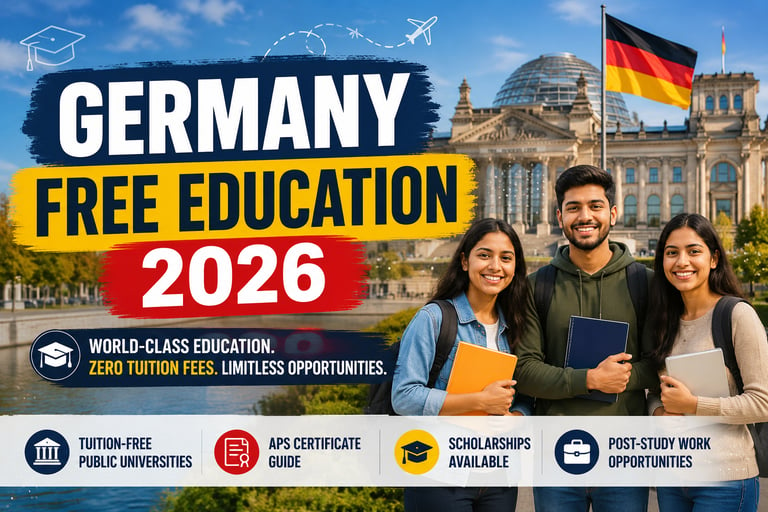

Studying abroad is a dream for many Indian students, but rising tuition fees in countries like the USA, UK, and Australia often make international education financially difficult. Over the last few years, Germany has emerged as one of the most preferred destinations for students seeking high-quality education at an affordable cost. This is one of the biggest reasons why the topic “Germany Free Education 2026 for Indian Students” is currently trending across educational discussions, study-abroad platforms, and online searches.
Germany is widely recognized for its strong education system, world-class universities, advanced research opportunities, and globally respected degrees. What makes the country even more attractive is that many public universities in Germany offer education with very low or zero tuition fees, even for international students.
Apart from affordable education, Germany also provides excellent career opportunities, a safe student environment, modern infrastructure, and post-study work options. As preparations for Winter Intake 2026 begin, many Indian students are actively searching for information related to APS certificates, student visas, scholarships, blocked accounts, and admission procedures.
For students who wish to pursue international education without creating an overwhelming financial burden on their families, Germany may become one of the smartest educational choices in 2026.
Why Germany is Becoming a Top Study Destination in 2026
Germany has steadily become one of the leading study-abroad destinations for international students. The country is home to several globally ranked universities known for innovation, technology, engineering, healthcare, and research-based education.
One of the major reasons behind Germany’s growing popularity is its tuition-free or low-cost education system at public universities. Unlike many countries where students pay extremely high tuition fees every year, German public universities usually charge only a small semester contribution fee.
Students also benefit from:
Globally recognized degrees
Strong research opportunities
Modern campus facilities
Industry-linked programs
Affordable public transportation
Safe and student-friendly cities
Opportunities for part-time work
Germany’s economy is one of the strongest in Europe, and the country consistently requires skilled professionals in fields such as engineering, IT, artificial intelligence, healthcare, renewable energy, and business analytics. This creates strong career prospects for international graduates.
Another reason why Germany is trending among Indian students is the increasing awareness of affordable study abroad opportunities. Many students now prefer practical, career-oriented education systems that combine academic knowledge with industrial exposure, and Germany offers exactly that balance.
Is Education Really Free in Germany?
This is one of the most frequently asked questions among students planning to study abroad.
In most cases, the answer is yes — especially at public universities.
Most public universities in Germany do not charge tuition fees for undergraduate and several postgraduate programs. Students are generally required to pay only a semester contribution fee, which usually ranges between €150 and €350 per semester.
This contribution fee often includes:
Student administrative services
Campus facilities
Student union benefits
Public transport passes
However, students are still responsible for managing their living expenses, accommodation, food, transportation, and health insurance.
Private universities in Germany are different and may charge considerably higher tuition fees. Therefore, students looking for affordable international education usually prefer public universities.
Why Indian Students Prefer Germany
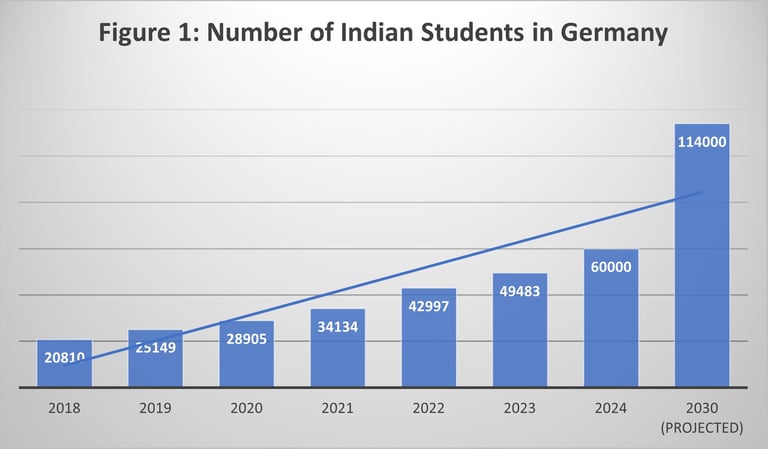
Germany has become increasingly popular among Indian students because it offers both affordability and academic excellence.
Unlike some countries where education loans can become a major burden, Germany allows students to obtain internationally respected degrees at comparatively lower costs.
Strong Engineering and Technical Education
Germany is globally famous for engineering, manufacturing, and industrial innovation. The country is home to internationally recognized companies such as:
BMW
Mercedes-Benz
Siemens
Bosch
Volkswagen
Students interested in:
Mechanical Engineering
Automotive Engineering
Computer Science
Robotics
Artificial Intelligence
Electrical Engineering
Data Science
often consider Germany one of the best destinations for higher education.
Post-Study Work Opportunities
Germany allows international graduates to stay in the country for up to 18 months after completing their studies to search for jobs related to their qualifications.
This post-study work opportunity is one of the major attractions for international students because it allows them to gain valuable global work experience.
English-Taught Programs
Many German universities now offer English-medium programs, especially at the postgraduate level. This has made Germany more accessible for international students who may not initially know the German language.
However, learning basic German can still help students in daily life, internships, and future employment opportunities.
Top Public Universities in Germany Offering Affordable Education
Germany has several respected public universities known for academic quality and research excellence. Some of the most popular universities among Indian students include:
Technical University of Munich
RWTH Aachen University
Heidelberg University
University of Stuttgart
Free University of Berlin
University of Hamburg
Karlsruhe Institute of Technology
These universities are known for their strong academic standards, advanced laboratories, research opportunities, and industry collaborations.
Eligibility Criteria for Indian Students
The eligibility requirements may vary depending on the university and program. However, most universities generally require the following:
For Bachelor’s Programs
Completion of Class 12
Good academic performance
Valid passport
Language proficiency
APS certificate
Some students may also need to complete a preparatory foundation course known as Studienkolleg if their educational qualifications do not directly match German university requirements.
For Master’s Programs
Recognized bachelor’s degree
Academic transcripts
IELTS or TOEFL scores for English-taught courses
Statement of Purpose (SOP)
Letters of Recommendation
Updated resume or CV
Certain technical or specialized courses may additionally require project portfolios or work experience.
APS Certificate: An Important Requirement for Indian Students
The APS certificate has become one of the most important requirements for Indian students planning to study in Germany.
APS stands for Academic Evaluation Centre. It is used to verify the authenticity of academic documents submitted by students applying to German universities.
The APS verification process was introduced to improve document authentication and streamline admissions for Indian applicants. Without the APS certificate, many students may not be able to proceed with their student visa process.
Students should apply for the APS certificate early because the processing period may take several weeks, especially during busy admission seasons.
Commonly required documents include:
Academic transcripts
Degree certificates
Passport copy
Language certificates
Application form
As Winter Intake 2026 approaches, early preparation for APS verification can help students avoid delays.
Step-by-Step Process to Apply for Free Education in Germany
Understanding the admission process carefully can improve a student’s chances of success.
Step 1: Choose the Right Course and University
Students should research programs according to:
Career goals
Budget
Course structure
Language of instruction
Internship opportunities
University rankings
Always refer to official university websites for the latest information.
Step 2: Prepare Language Test Scores
Most English-medium programs require:
IELTS
orTOEFL
German-language programs may require:
TestDaF
DSH
Step 3: Apply for APS Certificate
Indian students should begin the APS process as early as possible to avoid delays in admission and visa procedures.
Step 4: Arrange Required Documents
Typical documents include:
Academic certificates
Passport
Statement of Purpose
Recommendation letters
Resume
Language test scores
Step 5: Submit University Applications
Applications may be submitted directly through university portals or through the Uni-Assist platform.
Students must carefully check deadlines for Winter Intake 2026.
Step 6: Open a Blocked Account
A blocked account is a special bank account required for international students applying for a German student visa. It acts as proof that students can financially support themselves during their stay in Germany.
Students are generally required to deposit approximately €11,000–€12,000 into the blocked account.
Step 7: Apply for Student Visa
After receiving an admission letter, students can apply for a German student visa through the German Embassy or Consulate.
Cost of Living in Germany for Indian Students
Although tuition fees at public universities are low, students should still plan their finances carefully for monthly living expenses.
Expense
Estimated Monthly Cost
Accommodation - €300–€700
Food -€150–€250
Health Insurance - €100–€120
Transportation - €50–€100
Miscellaneous Expenses -€100–€200
Living expenses may vary depending on the city and student lifestyle. Cities like Munich, Frankfurt, and Hamburg are generally more expensive, while smaller student towns may be comparatively affordable.
Students often reduce expenses by:
Staying in shared apartments
Cooking meals at home
Using student discounts
Working part-time
Can Students Work Part-Time in Germany?
Yes, international students in Germany are allowed to work part-time while studying.
Students can generally work:
120 full days
or240 half days annually
Part-time jobs help students manage daily expenses while also gaining work experience and exposure to German culture.
Popular student jobs include:
Research assistant
Campus support staff
Restaurant work
Library assistant
Delivery services
Students with technical skills may also find internships related to their academic field.
Scholarship Opportunities in Germany
Even though education is already affordable at public universities, scholarships can further reduce financial pressure on students.
Popular scholarship options include:
DAAD Scholarships
Deutschlandstipendium
Erasmus+ Scholarships
University-specific scholarships
These scholarships may support:
Monthly living expenses
Research funding
Travel assistance
Health insurance
Some scholarships are merit-based, while others may consider financial need, research potential, leadership qualities, or extracurricular achievements.
Students with strong academic records and active participation in extracurricular activities often have better chances of receiving scholarships.
Best Courses to Study in Germany in 2026
Germany is especially known for technical, industrial, and research-oriented education.
Popular courses include:
Mechanical Engineering
Computer Science
Artificial Intelligence
Data Science
Automotive Engineering
Business Analytics
Renewable Energy
Biotechnology
Healthcare Programs
Management Studies
Germany’s strong industrial and research ecosystem makes these programs highly practical and career-oriented. Many universities collaborate directly with industries, allowing students to gain hands-on experience through internships, research projects, and innovation programs.
Challenges Students Should Be Prepared For
While Germany offers excellent educational opportunities, students should also prepare themselves for certain challenges.
Language Barrier
Although many courses are taught in English, daily communication may still require basic German language skills.
Learning simple German phrases can make everyday life easier and improve future job opportunities.
Competitive Admissions
Top German public universities receive applications from students across the world. Maintaining strong academic performance can improve admission chances.
Cultural and Weather Adjustments
Students from India may initially find Germany’s climate, food habits, and lifestyle different. However, most international students gradually adapt to the environment.
Final Thoughts
Germany Free Education 2026 for Indian Students is more than just a trending topic. For many students, it represents an opportunity to achieve international education without facing extremely high tuition fees.
Germany combines:
Affordable education
Globally respected universities
Practical learning opportunities
Research-focused programs
International career exposure
Post-study work opportunities
As competition for Winter Intake 2026 continues to increase, students should begin preparations early for APS certificates, language tests, blocked accounts, scholarships, and university applications.
For many Indian students, Germany is not only a destination for higher education but also a gateway to global exposure, professional growth, and a brighter international future.
Disclaimer
This article titled “Germany Free Education 2026 for Indian Students” is intended solely for educational and informational purposes. The content has been framed on the basis of publicly available information, regular newspaper reports, official educational updates, online research, and study-abroad related resources available at the time of publication.
Tuition fees, APS certificate requirements, visa policies, scholarship opportunities, admission procedures, university regulations, and living costs in Germany may change periodically. Readers are strongly advised to verify the latest information through official university websites, the German Academic Exchange Service (DAAD), and the German Embassy or Consulate before making academic, financial, or travel-related decisions.
EduBeatsWorld.com is an independent educational blog and is not affiliated, associated, authorized, endorsed by, or officially connected with any German university, educational institution, embassy, consultancy, or government body. The article does not guarantee admission, scholarships, visas, or employment opportunities in Germany.
contact@edubeatsworld.com
© 2024. All rights reserved.